
From beaver rescue to big screen: MSU scientist’s work informs new movie ‘Hoppers’

Contact: Meg Henderson
STARKVILLE, Miss.—When Pixar came calling for help bringing beavers to life in its new animated film “Hoppers,” Mississippi State scientist Holley Muraco was ready.
Muraco, an assistant research professor with MSU’s Department of Animal and Dairy Sciences at the Coastal Research and Extension Center in Biloxi, was invited to Pixar as an educational consultant after her hands-on work rehabilitating a rescued North American beaver named Tulip gained widespread attention.
“‘Hoppers’ has sparked a lot of interest in beavers, and it’s been a privilege collaborating with Pixar on their educational initiatives around the movie,” she said of the film released this past month. “It’s a fun, funny movie for all ages, and it has a great environmental message about human and animal co-existence.”
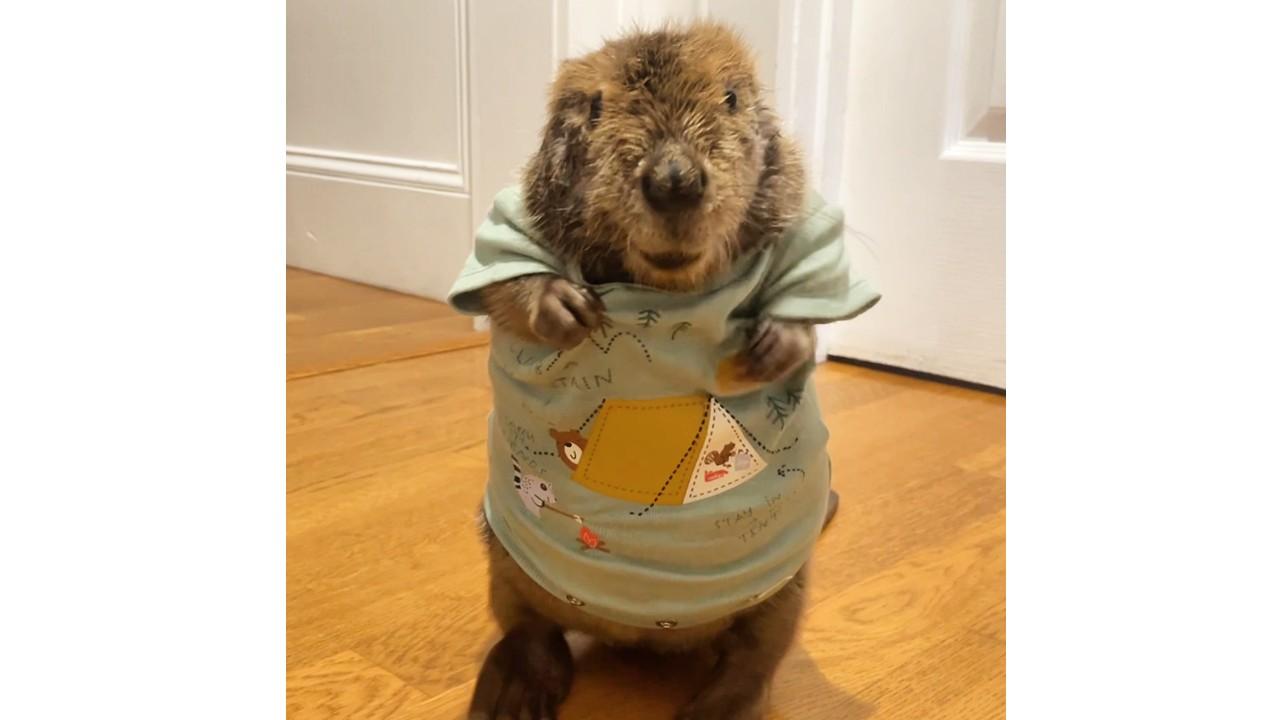
Tulip’s story began three years ago when Muraco took in the stranded five-month-old kit. Though the symptoms took a few weeks to emerge, Tulip had contracted a rare, life-threatening bacterial infection, most likely from the site where she was found.
“Tulip was my first rescue beaver. I went to the literature, but I didn’t find much information outside of trapping and processing,” said Muraco, who is also a scientist in the university’s Mississippi Agricultural and Forestry Experiment Station. “We don’t know much about beaver husbandry, veterinary medicine or behavior, so that initially sparked my interest in the species.”
Weeks after her arrival at Muraco’s facility, a severe skin infection appeared on Tulip’s upper back. It was caused by Acinetobacter baumannii, a bacterium normally found in hospitals and resistant to most antibiotics. The infection quickly led to necrotizing fasciitis, a dangerous flesh-eating condition, and critical illness–related corticosteroid insufficiency, or CIRCI, meaning Tulip wasn’t producing enough stress hormones to fight the infection.
Without other cases to consult, Muraco devised a novel combination of therapeutic interventions. She consulted with Dr. Tom Reidarson, a world-renowned wildlife veterinarian and MSU adjunct faculty, who helped her and the team at Gulf Coast Veterinary Emergency Hospital navigate the delicate balance of scaling manatee medicine to beavers.
“Manatees, like beavers, are hindgut fermenters, meaning an enlarged hindgut digests plant material through microbial fermentation,” Reidarson said. “Only certain antibiotics can be used safely because if you change the microflora in the hindgut, it affects their ability to ferment and makes them sicker. We don’t have a specific drug for beavers, but we could scale down the manatee drug.”
Tulip underwent surgery to remove the dead tissue. During her three-month recovery, she received prednisone to address the CIRCI, topical treatments, anti-inflammatories and light-based therapies to promote healing. A cotton infant bodysuit protected the wounds.
Now fully recovered, Tulip has become a social media sensation, drawing more than 140,000 followers. Likewise, Muraco has also gained acclaim for her work with rehabilitated beavers and other animals.
To learn more about MAFES visit www.mafes.msstate.edu. For more on the Department of Animal and Dairy Sciences, visit www.ads.msstate.edu.
Mississippi State University is taking care of what matters. Learn more at www.msstate.edu.