
MSU biologist Gout contributes to study reshaping complexity of aging
Contact: Sarah Nicholas
STARKVILLE, Miss.—Mississippi State University biologist Jean-Francois Gout’s contributions to a study highlighting key advances in the complexity of aging now are published in Science Advances, a leading peer-reviewed journal of the American Association for the Advancement of Science.
Gout’s collaboration with study lead Marc Vermulst, professor at the University of Southern California, Los Angeles Leonard Davis School of Gerontology, and his Ph.D. student Sarah J. Shemtov, focuses on how two major biological systems that influence aging—insulin-like growth factor-1, or IGF-1, signaling and mitochondrial function—interact to control lifespan in mammals. The open-access Science Advances is widely recognized for publishing high-impact studies across scientific fields.
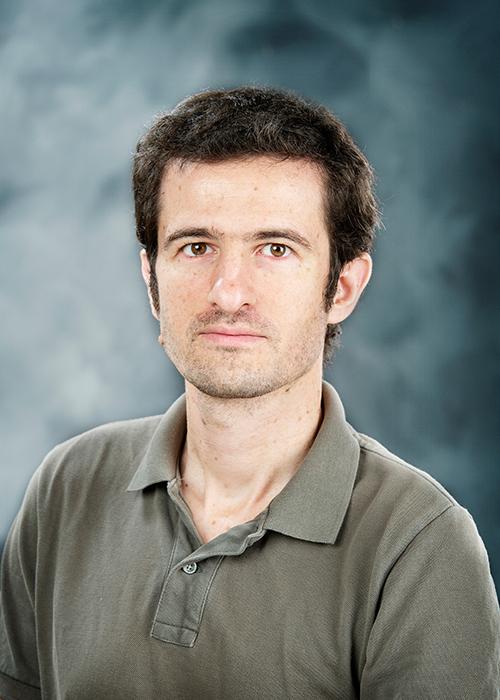
“The team’s work shows that while reducing IGF-1 signaling is widely known to extend lifespan and protect against age-related disease in many organisms, that benefit is not universal,” said Gout, who performed the bioinformatics analysis for this study and provided insight from his MSU work based on molecular evolution.
“When the integrity of mitochondrial DNA is compromised, downstream mechanisms that normally promote stress resistance and cellular repair may be blunted, effectively overriding the benefits of IGF-1 reduction. Overall, the study highlights the importance of maintaining the integrity of the mitochondrial genome for many lifespan-extending interventions to work as intended,” he said.
The study, available at www.science.org/doi/10.1126/sciadv.aea4279, indicates many approaches to extending lifespan depend on keeping the cell’s energy‑producing system intact.
For more information about MSU’s College of Arts and Sciences and the Department of Biological Sciences, visit www.cas.msstate.edu and www.biology.msstate.edu
Mississippi State University is taking care of what matters. Learn more at www.msstate.edu.