
MSU-Meridian receives $500,000 grant to expand rural clinical training for physician assistant students
Contact: Marianne Todd
MERIDIAN, Miss.—Mississippi State University-Meridian is one of two Magnolia State institutions sharing a $500,000 U.S. Department of Education grant to expand clinical training opportunities for physician assistant students in rural Mississippi.
The funding, which runs through August 2029, will help strengthen future healthcare workforces and improve patient outcomes where access to care is needed most.
Collaborating with Mississippi Christian University in Clinton, the shared funding will support the development and expansion of rural preceptor partnerships, which provide supervision and training for students during required clinical rotations.
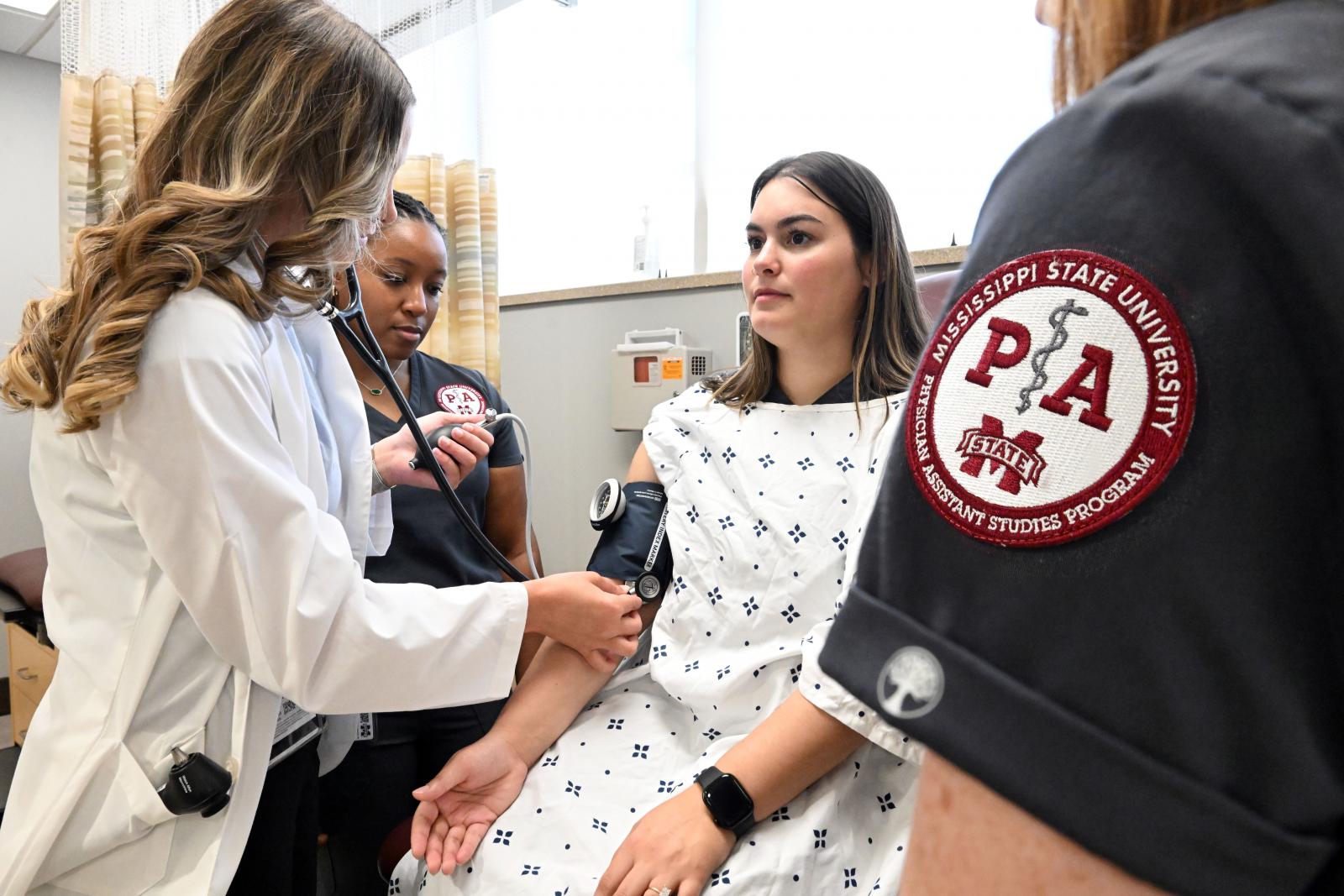
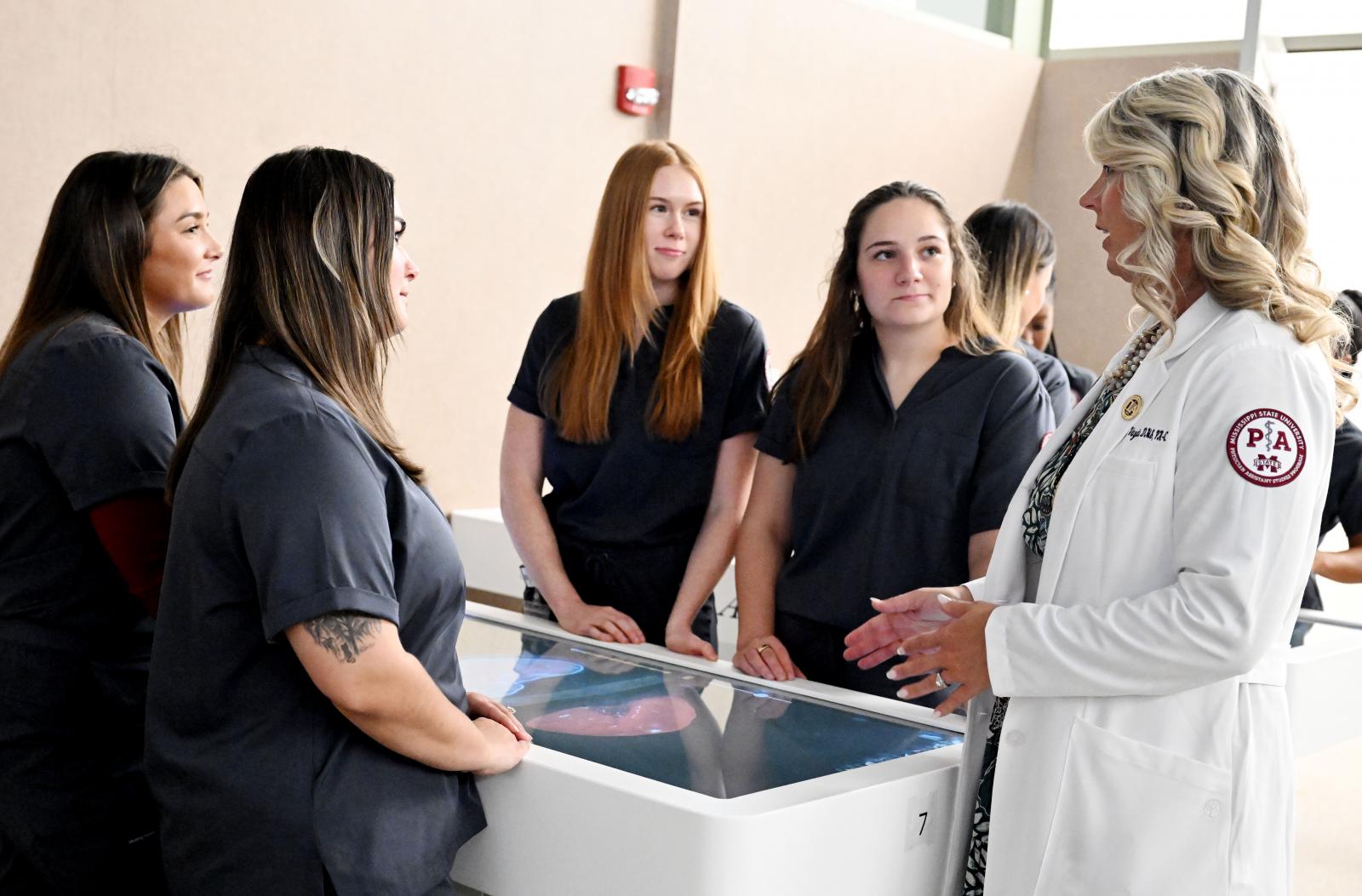
Lesley Clack, dean of MSU-Meridian’s School of Health Professions and principal investigator, said in addition to creating more preceptor relationships, the award will reduce financial barriers for the 40 MSU-Meridian PA students who are currently completing nine five-week rotations throughout the state.
“These students are already paying for apartments to live here while they’re in school,” Clack said. “This grant will help cover short-term housing costs students incur while they are completing these rotations.”
Pamela Vayda, who serves as MSU’s PA program director and department head, said, “MSU-Meridian already works with preceptors throughout Mississippi and in neighboring states, but this grant will expand the program and will allow students to expand job opportunities within Mississippi’s rural areas.
“Rural areas typically have less access to healthcare, and that can lead to delayed treatment, poorer management of chronic conditions and worse outcomes,” she continued. “By training physician assistants in a rural healthcare model, we are preparing them to serve in those communities. When students have a positive clinical experience and make connections in a rural community, there is a greater chance they may want to work there after graduation.”
Clack said the three-year planning phase is well underway with plans to hire a full-time clinical coordinator to identify clinical sites and nurture relationships with preceptors.
“This is an incredible opportunity for our students, for the PA program and for rural communities across the state,” Clack said. “It allows us to support students while also helping to meet a real need for healthcare access in Mississippi. We are very grateful to the Department of Education and to university leadership for making this happen.”
For more information about MSU-Meridian’s School of Health Professions, visit www.healthprofessions.msstate.edu.
Mississippi State University is taking care of what matters.