
Cultivating Dynamic Leadership: MSU pilot program helps DAFVM faculty build institutional perspective
Contact: Mary Kathryn Kight
STARKVILLE, Miss.—When Nicole Ashpole arrived at Mississippi State University a year ago to launch the new One Health program in the College of Veterinary Medicine, she brought enthusiasm, a long to-do list and years of academic experience. What she gained this spring was something her previous career hadn't given her: a real understanding of what a land-grant university is—and why it matters.
MSU is one of the nation’s land-grant universities, a designation established through the Morrill Act of 1862 to expand access to higher education and serve the needs of the state through teaching, research and outreach.
“Before, being a land-grant just meant it was a state designation with special funding,” said Ashpole. “I didn’t realize how much it means to the people here and to the state of Mississippi. Learning what a land-grant really is and how invested this university is in that mission was really important to me.”
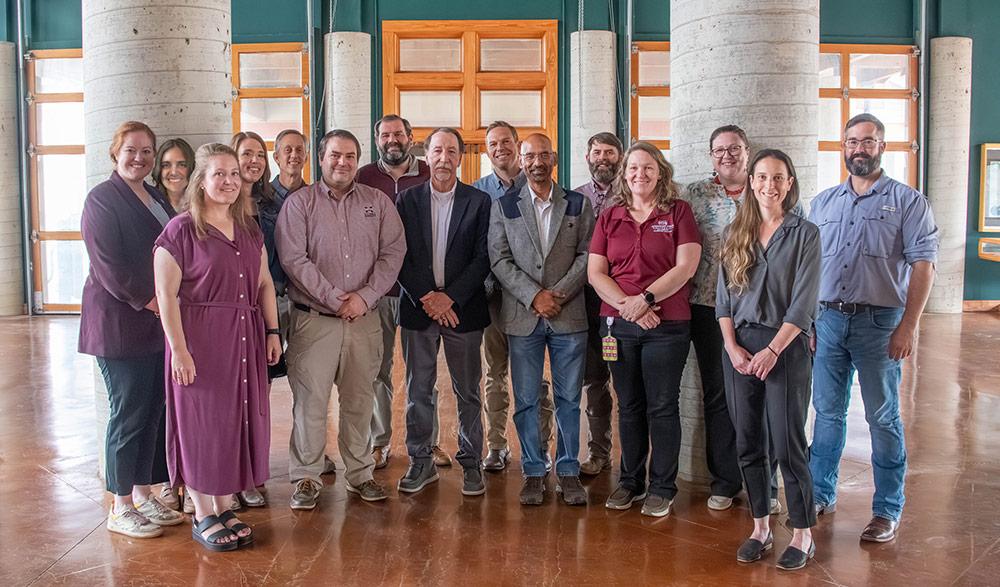
Ashpole was among a group of mid-career faculty selected to participate in “Cultivating Dynamic Leadership,” a pilot program designed to prepare the next generation of leaders who will guide the division’s teaching, research and outreach mission within the MSU Division of Agriculture, Forestry and Veterinary Medicine, or DAFVM.
The idea for the program came from Joshua Granger, an associate professor of forestry and a Ph.D. candidate in higher education leadership. Granger partnered with Steve Bullard, College of Forest Resources associate dean and Forest and Wildlife Research Center associate director, to design and lead the program.
The curriculum was built around three priorities: recognizing, understanding and communicating issues and opportunities affecting DAFVM units; fostering personal growth and professional development; and identifying actions for positive, sustainable change.
“The greatest shortcoming of most people in a leadership position is a lack of self-awareness,” said Bullard. “They talk too much instead of asking questions.”
The program brought faculty back to the classroom—this time as students. Assigned readings and guided discussions encouraged participants to look beyond their individual roles and gain a broader understanding of the university, its mission and the challenges facing higher education.
“Any time Dr. Bullard shared his insights, he was incredible to learn from. He has so much knowledge,” said Ashpole.
One of the readings that sparked the most conversation examined the changes confronting higher education—from competency-based learning to the growing expectations students bring into the classroom.
For Heidi Renninger, an associate professor of forestry, the program offered something she hadn’t expected: a broader view of the institution she’s called home for more than a decade.
“You kind of get in your own little box—teaching your class, doing your research,” she said. “When you look out, you realize things are potentially changing and you need to be thinking about this. How do we need to change? How do we need to respond?”
Drew Gholson, an associate professor of plant and soil sciences, said what set this experience apart was the quality of the conversations produced among peers.
“It wasn’t a lecture series, and it wasn’t just taking a test to find out our leadership style,” he said. “This program was actual dialogue with colleagues from across the division who we may not normally sit down and talk with, and that made all the difference. You leave those conversations with new perspectives.”
For DAFVM Vice President Keith Coble, that moment captured exactly what the program was designed to achieve.
“We wanted faculty to think beyond their individual roles and disciplines and see the bigger picture of how our division works together to fulfill our mission,” Coble said. “Seeing them stand up and present thoughtful, well-developed ideas to our executive team showed us this investment was worth making.”
For Ashpole, the program helped her better understand that the land-grant mission isn’t just a designation. It’s a culture.
“This was a good reminder that this environment is different,” she said. “There are people here who really want to make an impact. It kept that excitement going and reminded me why I wanted to pursue academia in the first place.”
Mississippi State University is taking care of what matters. Learn more at www.msstate.edu.